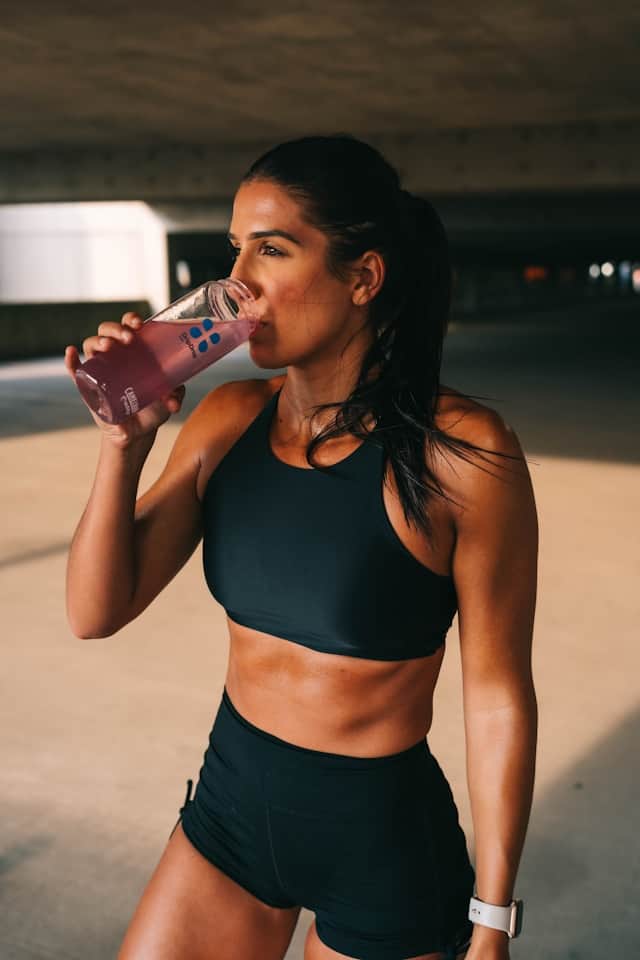
Start hydrated so heart rate and effort stay more stable.
During the run
Drink regularly and add electrolytes when heat or duration demands it.
After the run
Replace fluid loss and cool down actively to recover faster.
Running in the heat increases the burden on your heart, muscles, and nervous system. Your body tries to cool down by sweating more — sometimes as much as 1 to 2 liters per hour, depending on heat, intensity, and your individual sweating pattern. That sweat consists not only of water, but also of important electrolytes such as sodium, potassium, and magnesium. If you do not replenish this in time, your heart rate will increase faster, your pace will feel heavier, and the risk of dehydration, cramps, and overheating increases.
Hydration is therefore not just about “drinking enough,” but about the right timing, right amounts, and right composition. What, how much, and when you drink determines how much your body can cool and how efficiently you use energy. Smart hydration means you maintain your performance, speed up your recovery, and run much safer — especially on long runs or training in the sun.
Hydration also works best with a good nutrition plan. A correct balance between carbohydrates, fluid, and salt ensures that your heart rate remains stable and your energy reserves last longer. Also check out What to eat before a run? for ideas on how to plan carbs and salt hand in hand so your body can perform optimally in warm conditions.
Heat requires preparation. Your body must have enough fluid and electrolytes before you start running, otherwise you will already be behind. In warm conditions, good pre-run hydration can make the difference between a steady workout and heavy decline after a few km.
Start normally hydrated. Drink throughout the day and pay attention to thirst and your usual urination pattern; do not drink large extra amounts as a precaution.Extra sodium or oral rehydration solution is not a standard requirement before every hot run. Tailor any fluid and salt plan to your own losses, the conditions, and the session.Cool your wrists and neck with a wet towel or cool pack to keep your core temperature low before the start.Check temperature and humidity; High humidity prevents sweat from evaporating, causing you to overheat more quickly. So adjust your pace in advance.
Are you unsure about supplements? Supplements for runners explains when electrolytes, magnesium, or nitrates have added value and when it is better to avoid them.
During hot runs, make sure you can get a drink when you need one. Thirst is a useful guide if you do not know your sweat losses. An individual drinking plan can help during long or intense exercise; no fixed amount suits every runner.
Take small sips as needed. Match the amount to thirst, conditions, and any personal drinking plan; do not force extra fluid just to meet a fixed target.A sports drink containing carbohydrates and electrolytes can help replace energy and salt during longer exercise. Base the choice on your session, food intake, and losses, rather than simply passing the 60-minute mark.Wear light, breathable clothing and use a cap or sun visor to limit direct sunlight and cool your face.Plan your route smartly: run past water points, fountains, or take a drinking belt, vest, or handheld bottle with you. The right gear makes a heat run much safer.
Do you want to discover which drinking system suits you best? Read Best Accessories for Runners for options and comparison.
Short, easy run. Water is usually enough if you want a drink along the way.Longer or intense run. Consider how you will replace energy as well as fluid; a sports drink is one option.High sweat losses or prolonged exercise in heat. Tailor fluid and any salt replacement to the individual; a sports dietitian can help.
A salt capsule does not protect against drinking too much. Overdrinking can be dangerous even when the drink contains electrolytes.
Hydration doesn't stop when you're done — that's when recovery begins. By quickly and specifically replenishing fluids and electrolytes, you lower your heart rate, feel fit faster, and reduce the risk of cramps or headaches later in the day.
Weighing yourself before and after similar runs can help estimate net fluid loss: 1 kg less body weight roughly corresponds to 1 liter of net fluid loss. Drinking during the run affects this difference; it does not measure your total sweat loss.If you have plenty of recovery time, replace fluids gradually with drinks and normal meals. Do not force a large volume just to meet a requirement of 150% within two hours.If you need to perform again soon after substantial fluid loss, have a recovery plan tailored to your losses and available recovery time. Food also provides salt; a sports drink, oral rehydration solution, or salt capsule is not a standard requirement.Put on dry clothing, keep moving lightly in the first few minutes, and cool your wrists, neck, and forehead again to normalize your core temperature faster.
Dehydration occurs when you lose more fluid than you replace. Dark urine or urinating less can be consistent with this, but neither gives you a diagnosis on its own. Symptoms during a run do not tell you exactly what is wrong either.
Dizziness, headache, nausea, and an unusually high heart rate can have different causes. Fluid loss or overheating may be involved; some symptoms can also occur with overdrinking. Do not automatically take more water or salt to treat them.
Dark urine or less urination. Notice changes from your usual pattern; urine color alone does not give a complete picture.Dizziness or headache. Stop training, find somewhere cool, and consider whether you need help.Sudden drop in pace. Do not insist on your planned pace if you feel unwell.Heart rate much higher than normal. Take this seriously alongside how you feel; it does not prove that drinking more will solve the problem.
Heat is one of the biggest performance inhibitors for many runners — not because you are less fit, but because your body simply has to work harder to stay cool. When your core temperature rises, your heart rate shoots up, every pace feels harder, and your risk of dehydration or overheating increases.
Fortunately, you can significantly reduce that pressure with a few strategic cooling techniques. By making smart use of water, clothing, timing, and environment, your body stays within a safe temperature zone for longer. This way you not only maintain your performance, but your run also becomes a lot more comfortable and safer.
Start early in the morning or late in the evening. Temperatures and UV are then much lower, which keeps your heart rate more stable.Put a few ice cubes or a frozen bottle in your vest. Melting ice provides long-lasting cooling and helps keep your core temperature low.Wet your cap or headband. Evaporating water acts as natural air conditioning — ideal for low humidity.Pour water over your neck, arms, and wrists. These places cool your blood the fastest.Walk laps close to home or along fountains. This way you always have access to water and you can stop faster if necessary.
Most problems with hot running are not caused by extreme heat, but by small mistakes that accumulate. Think of drinking too little, starting too late, or not taking electrolytes while you sweat a lot. Individually these things seem harmless, but together they cause your body to overheat more quickly and your performance to plummet.
By recognizing and consciously avoiding these common mistakes, you'll keep your heart rate more stable, slow your core temperature, and keep your body functioning efficiently for longer — just what you need to train safely and confidently in warm weather.
Drinking more than your body needs. This can dilute sodium in your blood too far: hyponatremia. Drinking too much sports drink can also cause it; electrolytes do not make overdrinking safe.Forcing a fixed drinking target or ignoring thirst. If you do not know your sweat losses, use thirst as a guide and make sure you can get a drink along the route.Do not make route planning. Especially on hot runs, you need access to water — fountains, shade areas, stores.Assuming you always need extra salt. Normal meals provide salt too. Match any recovery plan to your losses and the time available to recover.Stay dressed too warmly. Dark, non-breathable clothing traps heat and pushes your heart rate up.
With a smart heating plan — hydration, pace adjustment, and cooling techniques — you can continue to train safely and strongly in the summer.
Test your breakfast and drinking strategy during long runs. Practice with gels so your stomach and intestines can adapt.
Aim for roughly 30-60 grams of carbohydrates per hour and adjust the plan to your stomach. Practice it several times during long runs.
Build your aerobic base, pace conservatively, and fuel in time. Heat management and hydration are crucial on race day.
Briefly ease your pace, relax your stride, and take fluids or fuel if it is safe to do so. Afterward, review your load and electrolyte strategy.
Choose light, easily digestible carbohydrates, spread them through the day, and avoid unfamiliar foods. Drink normally and pay attention to sodium if it is warm.
Adequate fluid intake supports circulation and muscle recovery. In warm conditions, add electrolytes to replace losses.
Choose light, easily digestible carbohydrates such as toast, banana, or yogurt with honey. Give yourself 30-90 minutes to digest it.
For easy, short runs it can be fine if you feel good. Do not force it, and eat a snack with protein afterward to support recovery.
Caffeine can improve focus and performance if the dose and timing suit you. Test it in training first so you do not run into stomach issues.
In warm weather or during long sessions, electrolytes help you retain fluid better. They are especially useful for runs longer than an hour or when you sweat heavily.
Start with small amounts during long runs and gradually increase. Choose flavors and textures your stomach tolerates well.
Plan a timely bathroom stop and limit fiber and carbonated drinks in the hours beforehand. Arrive early and check where the facilities are.
Take a small carbohydrate dose every 25-35 minutes and drink to thirst, adding electrolytes in the heat. Practice your exact approach well before race day.
Train race-specific paces, fuel in time, and pay attention to electrolytes. Avoid suddenly overstriding in the final stages.