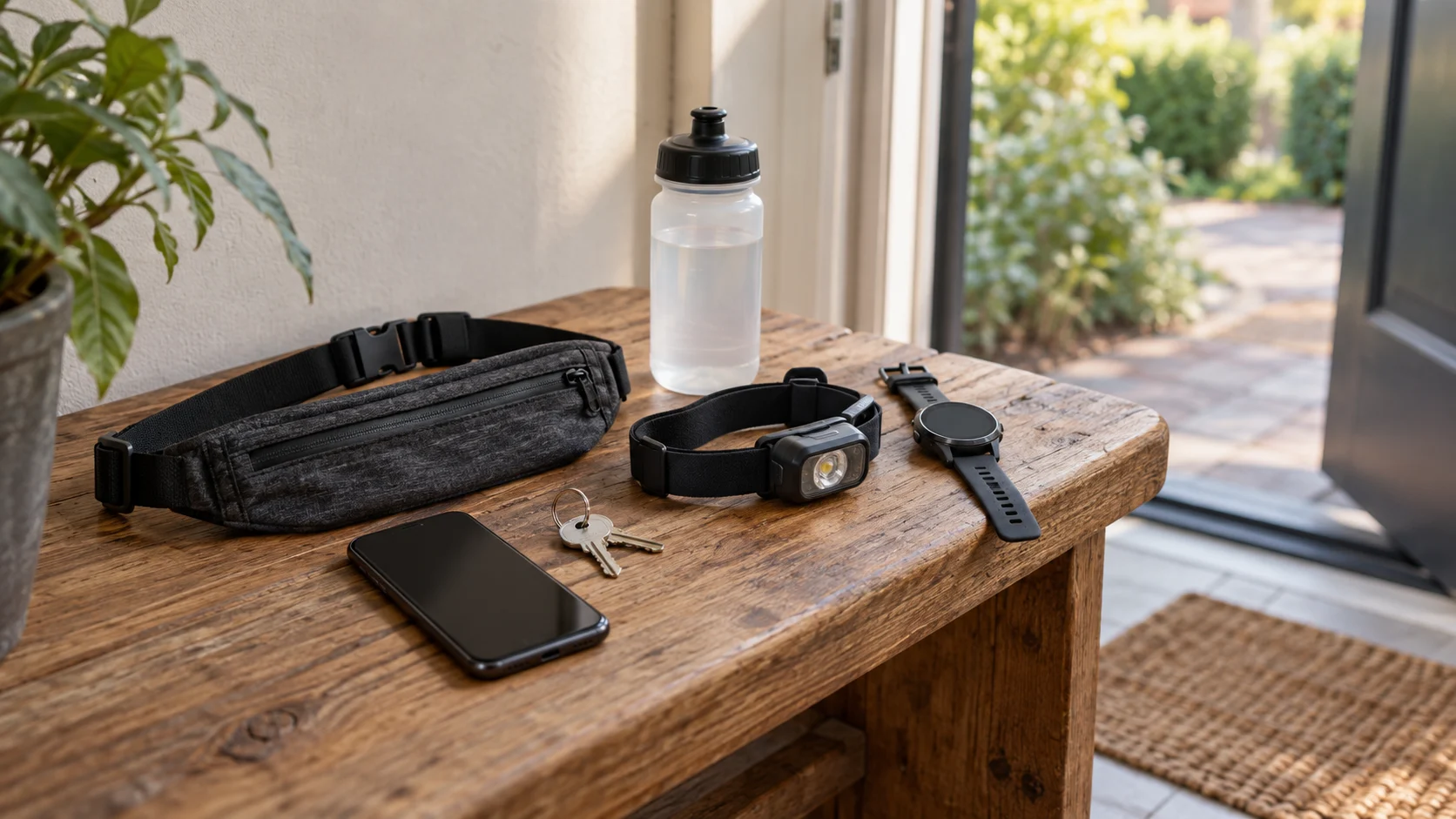
01Dress smart in the cold
You are standing by the front door, jacket in hand. It is 41°F (5°C) outside, but a few minutes into a run will probably feel different from waiting at a bus stop. That is what can make choosing winter running clothing tricky: you want to start comfortably and still be able to let heat escape once you get going.
A breathable base layer, an insulating mid layer when needed, and protection from wind or rain give you options to combine. You do not need all three on every run. A long-sleeved top may be enough on a dry, calm winter day; a cold headwind or walking breaks can make an extra layer useful.
Below are outfits to try, followed by advice on fabrics and what to look for when buying. Check what you already own, too. A running top that fits well in autumn can still work as your base layer in winter.
02 · Clothing by temperatureWhat do you wear at different temperatures?
Use these examples for an ordinary run on suitable roads or paths. They are starting points to try, not rules. How warm you feel depends on you, your session, and your route. Around 50°F (10°C), you might wear less for a brisk run than for an easy run with walking breaks.
Check wind and rain as well as the thermometer before heading out. An easy outing with frequent stops calls for different choices from continuous running. Test an unfamiliar outfit on a loop close to home so you can adjust it easily.
50–59°F (10–15°C): fresh autumn run
In dry weather, you can often start with a thin technical top, choosing short or long sleeves to suit you. Your winter jacket does not have to come along just because it is November.

41–50°F (5–10°C): mild winter day
A long-sleeved top and full-length tights are a useful starting point. Then decide what you need more of: warmth or protection from the wind.

At around 41°F (5°C), do not automatically reach for a top, fleece, and jacket together. Start with a combination that suits your effort and adjust it if you remain too warm or too cold.
32–41°F (0–5°C): real winter cold
Near freezing, a little more insulation can be useful, especially with wind or walking breaks. Consider this combination:

You can leave out the mid layer if a base layer and jacket keep you warm enough. If your thighs feel cold, tights with a wind-resistant front panel may help; thermal tights do not automatically include one.
Below 32°F (0°C): Cold to freezing conditions
Just below freezing on a dry, still day is different from severe frost with wind. These clothing examples are for ordinary winter runs close to home, rather than an equipment guide for extreme cold.

Check for slippery surfaces, too. Choose a shorter route or an indoor alternative when needed; warmer clothes do not make an icy path suitable for running. If you feel increasingly cold as you run, shorten your route and seek shelter and warmth.
Wind and rain: adjust your clothing
The same temperature can feel much colder on an exposed coastal path than between buildings. A thin wind jacket may be enough in dry, windy weather. For persistent rain, look for a waterproof jacket with sealed seams, a well-fitting hood, and ventilation options. A water-repellent jacket offers only limited protection from rain.
Think about the whole route: a tailwind on the way out can feel pleasant, while the return brings a headwind against damp clothing. Short loops near home make it easier to change your plans. Shelter can help in an ordinary breeze; in strong winds, avoid places with a risk of falling branches and follow weather warnings.
If getting out the door is the main obstacle, our guide to motivation in bad weather offers ideas for a manageable routine and an alternative when running outside is not suitable.
03The three layers explained
Layering helps you separate three functions. Sometimes one garment serves more than one purpose; sometimes you leave a layer out. That gives you a way to make a useful adjustment without simply adding thicker clothes.
Base layer
Mid layer
Outer layer
Base layer
Your base layer should fit closely without feeling restrictive. A long-sleeved thermal top is one option, but a thin technical running top can serve the same purpose. At higher effort, a light fabric may suit you better than your thickest thermal.
Synthetic or merino? Synthetic base layers generally dry quickly. Merino can be useful if limiting odor matters to you, but usually takes longer to dry. Fabric weight and fit also affect comfort; the material name alone does not tell you whether a top suits your run.
Cotton holds a lot of moisture and dries slowly. A technical top is therefore usually more practical for a sweaty run in the cold. Thermal leggings under your pants can add warmth when needed; check that the combination allows free movement and does not rub.
Middle layer
The mid layer retains warmth. Think of a light fleece, a stretchy sports top, or a warmer technical top over your base layer. You should be able to move your arms freely, with enough space left under your jacket.
A half-zip makes it easier to ventilate as you run. If you feel too warm, open the zipper or remove a layer before getting unnecessarily clammy. The same layer may be welcome again when you stop or take a walking break. In dry, calm conditions, a base layer and mid layer may be enough without a jacket.
Outer layer
Choose your outer layer for the weather. A light wind jacket helps block wind and is often compact enough to carry easily. A water-repellent finish can shed light rain for a while, but does not make a jacket waterproof.
For persistent rain, a waterproof running jacket is a more suitable choice. Look for sealed seams, a well-fitting hood, and ventilation openings. Even a breathable rain jacket can become damp inside from sweat: waterproof does not mean you will stay completely dry at every effort level.
Try the jacket over the layers you intend to wear. Move your arms, turn your head with the hood up, and try the zipper with gloves on. Reflective details are useful, but a small logo does not replace a well-considered visibility setup for a dark route.
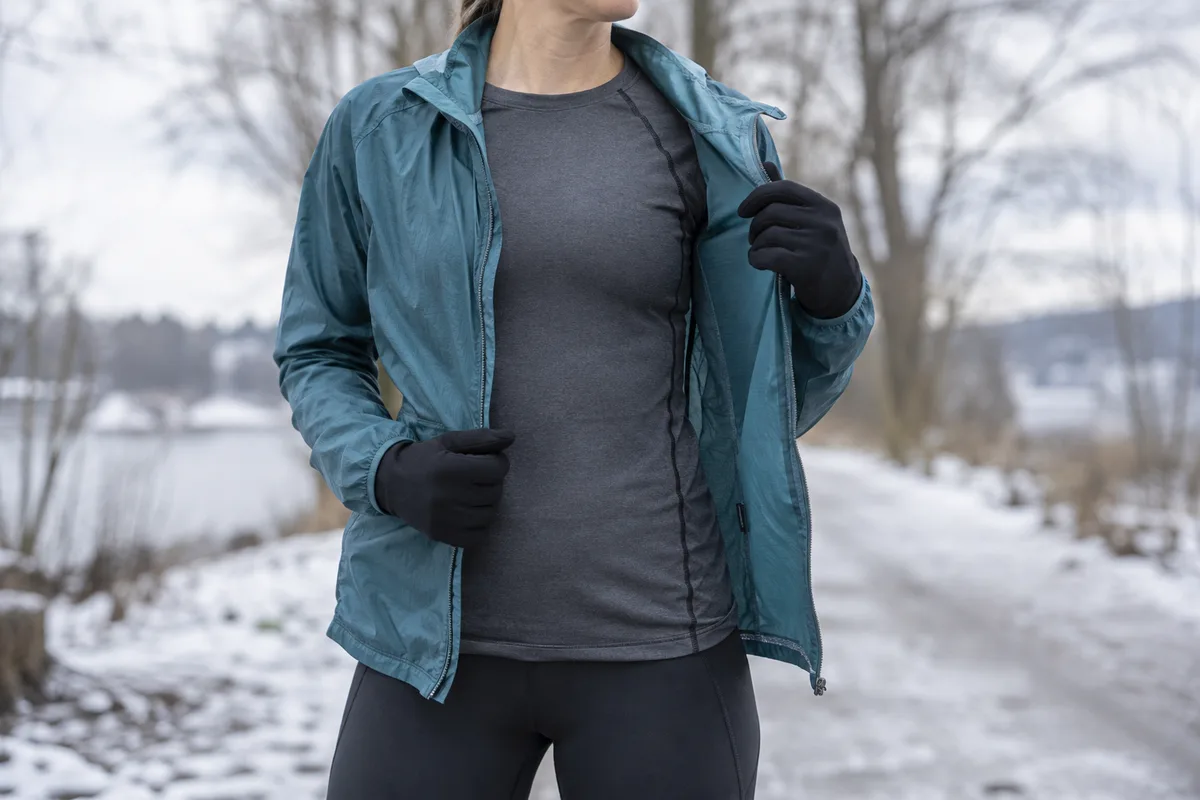
The photo shows how a thin outer layer fits over a close-fitting top. You do not always need a fleece in between: add one when you need more warmth.
04Essential extras
Warm hands and ears can make the difference between enjoying your run and constantly adjusting your sleeves. Choose accessories you can remove or stow easily as you warm up.
For specific options for reflective running gear and lights, see our running accessories guide.
05Garments and their function
Does something feel missing from your outfit? Use the function in this table to choose a targeted adjustment.
| Garment | Function | What to look for |
|---|---|---|
| Base layer | Helps move sweat away from your skin | A close but comfortable fit; quick-drying fabric |
| Mid layer | Retains extra warmth | Match thickness to your effort; a half-zip helps ventilation |
| Outer layer | Protects against wind or rain | Wind resistance and waterproofing are different properties |
| Gloves/headband | Covers hands and ears against the cold | Easy to remove; enough room to move |
| Thermal tights | Add insulation for your legs | Check wind resistance separately |
| Reflective gear/lights | Helps you stand out after dark | Combine reflective material with active lights; light your path too |
06 · Choosing clothing and brandsWhat to check before buying: clothing and brands
Start with what your current outfit lacks. If you are warm enough but bothered by wind, another thick top may be less useful than a light outer layer. Try clothes with the layers and shoes you will run in; jog a little and check the seams, waistband, and freedom of movement.
These four models illustrate different choices, from a budget top to a rain jacket. The selection is based on manufacturer information, not our own wear tests. Links point to specific men's models on European or UK stores; choose a cut that suits your body and check the version, available sizes, and delivery country.
Base and mid layers
The Kiprun Run 100 long-sleeved half-zip top is a budget option for a base or light mid layer. The half-zip allows ventilation, while thumb loops help keep the sleeves in place. Treat it as a starting point for cool conditions, rather than protection from rain or a guarantee of warmth below freezing.
If you prefer another base layer, compare fabric weight, feel against your skin, and drying time first. For extra insulation, a light fleece you already own may work as long as it fits comfortably under your jacket.
Windproof and waterproof jackets
The Kiprun Run 100 wind jacket is a budget example for dry, windy runs. It has a hood, two side pockets, and mesh under the arms for ventilation. The fabric is windproof, but the jacket is not waterproof. Persistent rain therefore calls for a different outer layer.
The Kiprun Run 900 waterproof running jacket has a waterproof membrane and sealed seams, according to Decathlon. That makes it a concrete example for runners who also go out in rain. Check how the hood and ventilation work for you. On dry, mild days, a rain jacket may provide more protection than you need.
Tights and winter accessories
The Odlo Essential Warm running tights have a brushed lining, an adjustable waistband, and reflective details. They are an example of tights with added insulation. The version checked does not list a windproof front panel, so do not read “Warm” as a promise of wind protection.
Try gloves for freedom of movement and check that they fit in your jacket pocket. With a hat or headband, check that your ears stay covered as you move. For socks, fit and enough space inside your shoes are more useful starting points than matching the brand of your jacket.
07Practical tips for winter runs
Lay out your clothing before leaving and check how the weather will change over the whole run. A few small habits can help you work out which combination suits you.
Afterward, note the weather, what you wore, and whether you felt too warm or cold. A few runs will give you a personal guide that is more useful than always dressing as though it is “9°F (5°C) warmer.” Wash technical clothing according to its care label, particularly water-repellent or waterproof outer layers.
08 · MistakesCommon mistakes
An outfit that feels wonderfully warm at home can be too much once you are running. Equally, a thin jacket that works well in wind may not suit an hour of rain. These are the choices to check before you head out:
If you want to build a manageable winter routine, a personalized running plan can help you balance training and rest at your level. Then adjust your clothing to the planned session and the weather.