
You have closed your laptop, but the day is still going around in your head. A conversation that stayed with you, something due tomorrow, a message you want to answer. Getting outside for a while can feel welcome. Shoes on and out for a run, without needing to set a PR along the way.
Running can help with stress, although the effect varies between people and from one day to another. A run that suits you gives you a chance to move and turn your attention to something else. Here is how to approach it, including when you are new to running or short on energy.
01 · How running can helpHow running can help with stress
Physical activity can help reduce perceived stress and improve mood. Running also offers some very practical changes: you pause what you were doing, step away from your screen, and have something else to focus on. The rhythm of your steps, the air outside, or a conversation with a running partner can provide a welcome break from a busy day.
The difference you notice may be small. Perhaps you spend less time thinking about that meeting afterward, or simply appreciate having made time for yourself. Sometimes your mind stays busy. That does not make the run a failure, and it tells you little on its own about what running might offer on other days.
Explanations often focus on endorphins or the stress hormone cortisol. Those alone cannot predict how you will feel after a session: the body's responses depend on factors including the effort involved and when they are measured. Use your experience to adjust your runs, without treating it as a medical measurement. If you also want to work on manageable goals and motivation, explore the psychology of running.
02 · Before your runBefore your run: check in with yourself
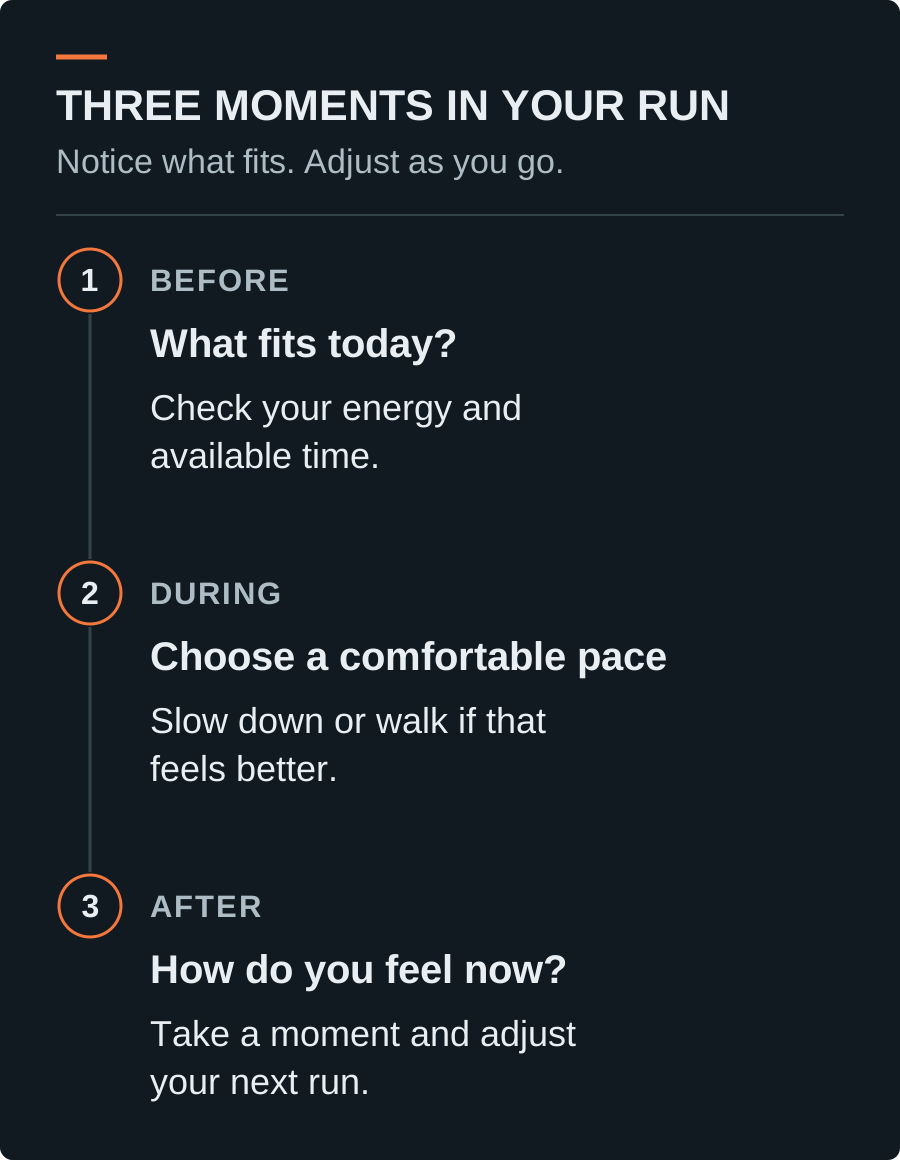
Before you leave, take a moment to consider what suits you today. A familiar loop is useful when you have already made plenty of decisions. Think of a park path, a quiet street, or a route you can easily shorten.
If you already have a session planned, consider adjusting it. An extra run on top of a full training week still adds to your workload, even if you call it a recovery run.
03 · During your runDuring your run: breathe, notice, and slow down
Start at a pace that feels comfortable. Being able to hold a relaxed conversation is a useful sign that you are not pushing yourself too hard from the outset. If talking becomes difficult or the effort feels greater than you expected, slow down or walk for a while. You do not need to maintain your planned pace for the run to be worthwhile.
If you already use a watch, understanding heart-rate zones can help you make sense of training intensity. You do not have to reach a particular zone to run for relaxation. How you feel and how much effort it takes still matter; your watch does not need your attention every minute.
You can try bringing your attention to your body and surroundings as you run. This is often called mindful running: noticing what is happening now without following every thought that comes along.
A short phrase such as “take it easy” or “light and free” can give you something to focus on if you find it helpful. A body scan or mantra is optional. So is music: choose what suits you, turn off unnecessary notifications, and stay aware of traffic and other people using the route.
04 · After your runAfter your run: how do you feel now?
You might like to walk for a few minutes before moving on to your next task. Drink if you are thirsty and give yourself time to catch your breath. Some gentle movement or stretching is fine if it feels pleasant; it is not an essential step for getting a mental benefit from your run.
Then ask yourself: do I feel calmer, much the same, or more on edge? You could write down one sentence about what you notice. Perhaps the quiet path felt good, but rushing to get home on time made the run less enjoyable. That is useful information for next time.
If you are still worrying, try not to respond automatically by running further or harder in pursuit of a clear head. Next time, you could try a shorter route, a walk, or some company. Consider your recovery away from running as well. Our article on sleep and recovery, for example, includes ideas for a regular sleep routine.
05 · How long and how often?How long and how often should you run to unwind?
There is no single duration or frequency that offers the best stress relief for everyone. “Reset run” is an informal name for a run that gives you a chance to switch gears; it is not a separate training method with a proven dose. Start with what is manageable within your current fitness and weekly routine.
New to running? A short walk with a few stretches of gentle running can be a starting point. You do not need to run continuously for twenty or thirty minutes. Take rest days between runs and build up gradually, rather than starting to run every day whenever stress is high.
Already running regularly? A familiar easy run of twenty to thirty minutes, for example, may suit you if you are used to that duration. A shorter one is fine, too. During a busy week, adjust an existing session instead of automatically adding another.
A regular slot can make the practical side easier, perhaps after work or on a free morning. Leave room to move it. Running two or three times a week is not a compulsory stress-relief target, and a missed session does not need to be made up. If you want help organizing your running week, you can use a personal running plan as a starting point while continuing to take into account how you feel.
06 · Which type of run suits you?Which type of run suits your energy today?
Choose a type of run based on your experience, energy, and available time. A long run is not automatically more relaxing than a short loop. A woodland route may feel pleasant, but the terrain can also require more attention.
Short reset run
Long easy run
Mindful run
Woodland or trail run
The table helps you consider what fits today. These options can overlap: a short loop through the woods can also be a mindful run.
| Type of run | When might it suit you? | What should you consider? |
|---|---|---|
| Short reset run | You want to move for a while after work or an appointment. | Choose a familiar duration and leave room to walk or shorten the route. |
| Long easy run | You have time and are already used to the distance. | More kilometers also mean more physical load; do not extend your run solely to get rid of tension. |
| Brisk intervals | You are an experienced runner and they already fit your training plan. | Not a default choice when energy is low or for a stressed beginner. Hard running does not guarantee greater mental relief. |
| Mindful run | You want to practice noticing your steps, breathing, or surroundings. | You do not have to keep your mind empty. Thoughts can still come and go. |
| Woodland or trail run | You would like green surroundings and know suitable paths. | Consider the terrain, visibility, and access; unfamiliar or technical paths may need extra attention. |
07 · Common mistakesCommon mistakes when running for stress relief
A watch or training plan can provide structure. It becomes less helpful if you start to feel that even unwinding comes with a list of requirements. Watch for these common pitfalls:
Allow for an alternative when running outdoors is inconvenient or unsafe, too. Our article on running in bad weather offers ideas for planning a backup option. A quiet day can be part of that plan.
08 · Walking, rest, or extra supportWhen are walking, rest, or extra support more helpful?
On a day when energy is low, walking may be a better match for what you can manage. You get outside and move while choosing your own distance and pace. If you are ill, in pain, or very exhausted, do not try to push through it with a training session. Rest, or discuss your symptoms with a healthcare professional if you are unsure what is appropriate.
If stress keeps disrupting daily life, you are persistently sleeping poorly, or you can no longer cope with the pressure, contact your doctor or another appropriate healthcare professional. They can help you explore suitable support. You do not have to wait until you feel completely overwhelmed. For burnout or other mental health difficulties, running is not a replacement for professional support or treatment.
A run can have a welcome place in your week. There can be other ways to manage stress alongside it, such as talking to someone you trust and considering which demands you can reduce.