01 · Why good shoes matterWhy good shoes make the difference
Running shoes largely determine how comfortable, stable and injury-free you run. With each step, your body absorbs one to three times your body weight. The right shoe distributes that impact better and helps you move in a way that suits your body and technique. Especially when you're training for longer distances — like with a personal plan — you want every step to feel efficient and safe.
Many runners choose their first pair of shoes based on color or brand. But how you land, how wide your foot is, and whether your foot rolls in or out determines much more. Understanding what your feet do suddenly makes choosing much easier. This way you prevent aches and pains such as knee irritation, shin splints or ankle complaints.
If you do not yet understand your running style, a running analysis can help enormously. This provides insight into your landing, your stride and the number of steps you take per minute; a higher cadence reduces impact on your joints.
02 · Types of running shoesTypes of running shoes
Neutral shoes
Stability shoes
Trail shoes
1. Neutral shoes
Neutral shoes are made for runners who roll their feet fairly straight, without clearly rolling in or out. This model is the best and most versatile option for many people. It feels light, flexible and natural, allowing you to comfortably complete both gentle endurance runs and tempo training.
Neutral shoes are especially ideal for runners who train without complaints and have no noticeable instability in the ankle or foot. That makes this type perfect for beginners and for runners who train according to a 5 km schedule or 10 km schedule.
Features
2. Stability shoes
Some runners roll their foot slightly inward during landing — this is called overpronation. Stability shoes provide extra support so that your foot rolls in a more controlled manner. This prevents overload and feels more stable, especially during longer endurance runs.
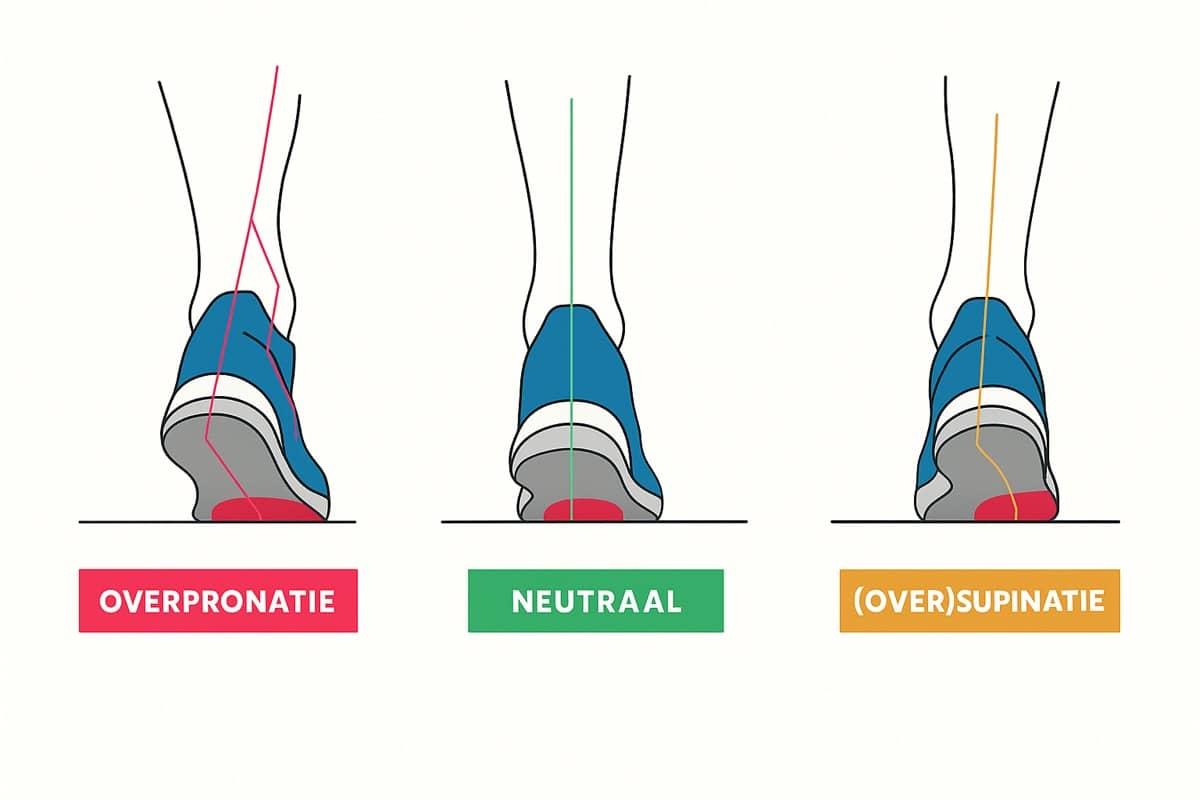
If you often have problems with your knees, ankles, or inner lower legs, this type of shoe can make all the difference — especially if you're following a training program for longer distances like a half marathon.
Features
3. Trail shoes
For anyone who likes to run in the forest, on sandy paths, through mud or in the dunes, trail shoes are the smartest choice. They offer much more grip than normal running shoes thanks to deep studs and a sturdier sole. In addition, they protect your feet better against stones, roots and uneven surfaces.
Even in winter conditions — wet grass, muddy parks, slippery trails — trail shoes are often safer than regular road models.
Features
03 · How do you know what suits you?How do you know what suits you?
Choosing the best running shoe does not start with the brand, but with your way of moving. Everyone lands differently: some runners have a firm heel landing, others touch the ground more lightly with their midfoot. Your hip stability, arch, stride length and cadence also play a role in how much support and cushioning you need. That's why a gait analysis is often the fastest and most reliable way to discover which shoe suits your body — regardless of whether you are a beginner or an experienced runner.
During such an analysis, a specialist looks at your landing, acceleration, posture and stability, usually via video recordings on a treadmill. Based on this, you will be shown shoes that suit your technique and running style. This not only prevents bad purchases, but also reduces the risk of injuries because the shoe fits your natural movement better.
You can have a free analysis done in many places, for example at Run2Day, where they help you find a model that really suits you instead of guessing based on brand or appearance.
In addition, pay attention to practical factors such as:
A running watch will then help you train in a way that suits your new shoes — also read Use of wearables to get the most out of it.
04 · What else should you pay attention to?What else should you pay attention to?
Even the best running shoe has an expiration date. As you travel more km, the sole slowly loses its cushioning and stability. You don't always notice this process immediately — you often run around unaware in shoes that no longer do their job properly. The result: stiffer calves, sensitive knees or just a little more impact on every landing.
That is why it is wise to check your shoes regularly, even if you have no complaints. Look at the profile, press on areas in the midsole, and feel if the sides still provide the same support as when they were new. For most runners, the lifespan is around 700–1000 km, depending on your weight, technique and surface.
Note:
05 · MistakesCommon mistakes
When choosing and using running shoes, habits quickly creep in that seem harmless in the short term, but can lead to complaints in the long term. For example, many runners do not notice that their feet swell while running, causing a shoe that "fits perfectly" in the store to suddenly become too tight during a run. Running shoes also wear out much more gradually than you think: you don't feel the cushioning decreasing from one day to the next — it slowly drops away, while the load on your muscles and tendons increases.
In addition, each training has a different impact. A gentle endurance run requires something different from your shoes than intervals or a trail run. Anyone who uses one pair for everything wears them out faster and sometimes misses exactly the support needed for that type of stimulus.
Common mistakes:
06 · Checklist: your next purchaseChecklist: your next purchase
Do you want to immediately incorporate this into a training plan? Then start with a personal schedule that adapts to your level and your weekly rhythm.