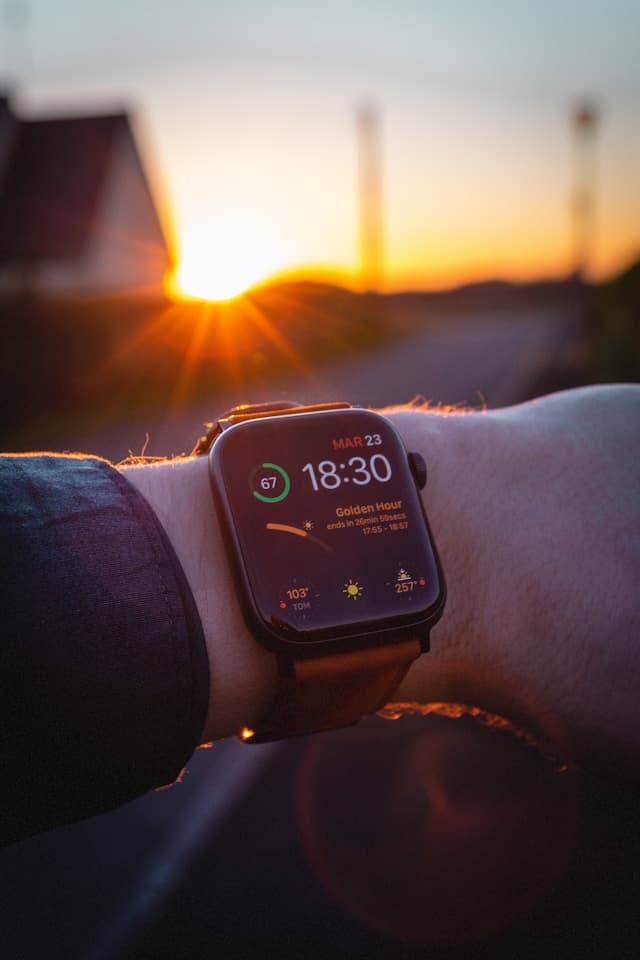
01 · Why wearables helpWhy wearables help you further
Running is not just about feeling — with the right data you can manage your training in a much more targeted manner. Wearables provide numbers, but you provide the context. They help you recognize what you wouldn't otherwise see: subtle improvements in pace at the same heart rate, increasing fatigue, or patterns in sleep and recovery.
At the same time, there is a pitfall in measuring more: without focus you quickly get lost in graphs. That's why a simple approach works best: plan → register → evaluate. Choose a few core metrics, track them consistently, and use them to make small improvements — not to analyze everything.
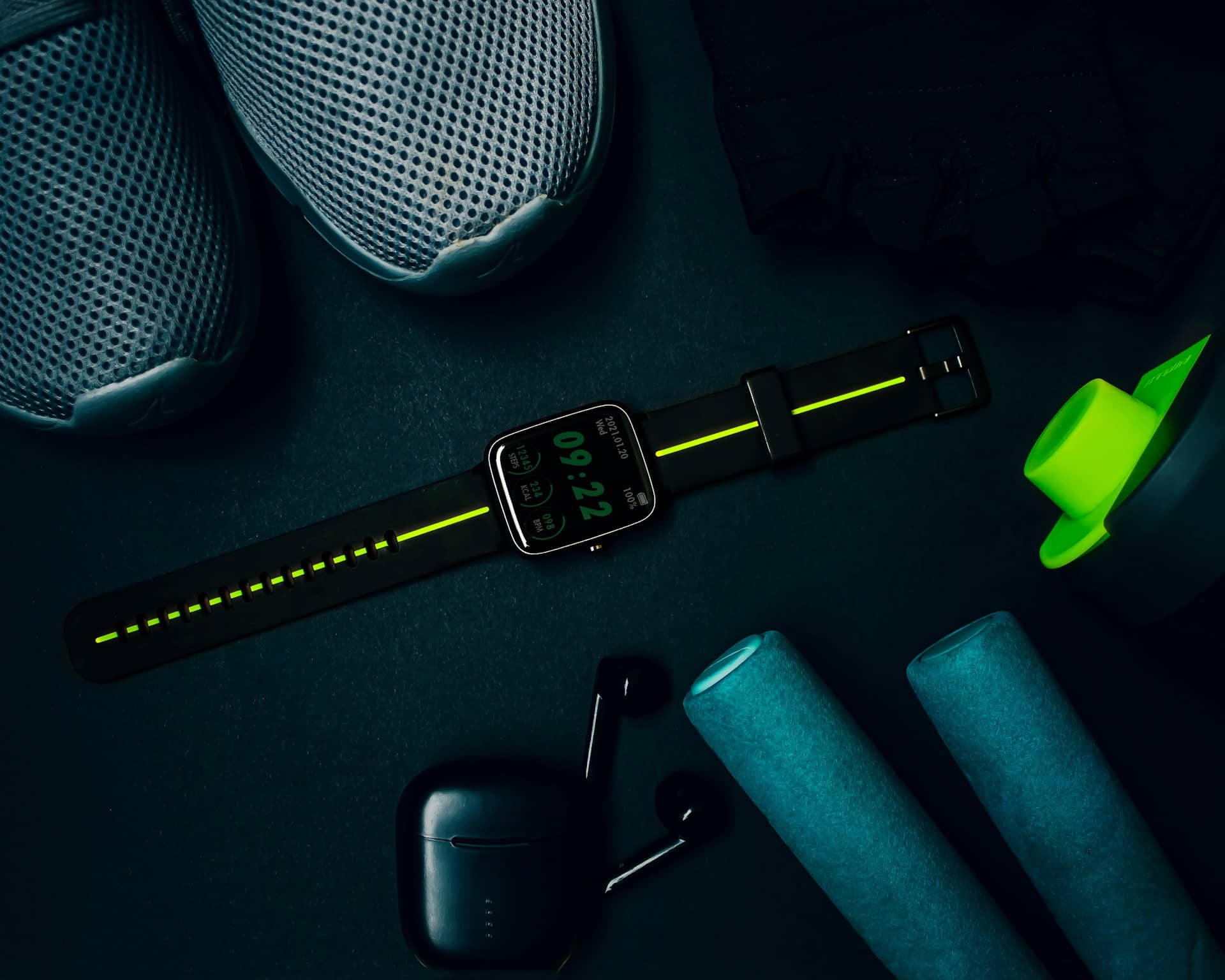
With such a fixed workflow, numbers do not become a distraction, but a tool to train smarter. The examples in Improve running speed: 6 proven methods show how wearables support and simplify tempo, interval and recovery training.
02 · Popular wearablesPopular wearables in brief
Garmin
Strava
Apple Watch
Garmin
Strava
Apple Watch
03 · Wearable comparisonWearable comparison
Not every runner has the same goals or the same way of training. Some want to dive deep into the data, others are mainly looking for motivation or convenience. This comparison helps you see at a glance which platform best suits your style — whether you train analytically, socially or all-round.
| Platform | Strong in | Less suitable for | For whom |
|---|---|---|---|
| Garmin | Highly accurate GPS, long battery life (several days), extensive training analysis (Training Load, VO₂max, HRV, Running Dynamics), schedules and workouts | Fewer community features, interface sometimes technical/complex | Runners who want to train in a targeted manner, follow schedules, run marathons/ultras or use a lot of analytical data |
| Strava | Community, segments, KOMs, clubs, challenges, training overview, social motivation | Limited physiological depth (depending on data from other devices) | Recreational runners, social runners, people who are motivated by challenges and comparisons |
| Apple Watch | Integration with iPhone, Health app, versatile daily use, solid heart rate monitoring, good workouts for intervals/tempos | Battery life for long runs (>3 hours), less in-depth running analysis than Garmin | All-round athletes, runners up to ± 10–20 km, people who want one device for sports + daily use |
04 · Key metricsMetrics that really matter
Not every metric is equally important. By focusing on a few core values you gain insight that you can actually apply in your training. These data provide the best combination of objective progress and practical guidance.
05 · Feel vs dataHow do you combine feelings and data?
Wearables can give you a lot of valuable information, but no watch knows how you really feel. That's why runners perform best when they combine data and body feeling. Your watch shows what's happening, but your gut tells why it's happening — and what adjustment you need that day.
Many runners fall into one of two extremes: either rely entirely on numbers ("my heart rate says it's not possible, so I stop"), or run solely on feeling ("I never look at data, because that drives me crazy"). The truth lies in the middle. Data helps you create structure and measure progress, while feeling protects you against overload and teaches you to listen to signals that no algorithm can pick up.
By seeing both sources as equal partners, you make better training choices, avoid frustration and get much more out of your efforts — from easy runs to tough interval blocks.
Practical situations
06 · Wearable reliabilityHow reliable are wearables?
Wearables are impressively accurate these days, but no running watch is a medical instrument. They collect data via sensors, algorithms and satellites — systems that can vary greatly in quality and sensitivity. This means that the numbers you see are always an approximation. They are incredibly useful for discovering trends and tracking progress, but less suitable for trusting every individual data point down to the decimal point.
That's why it's important to know how your watch measures. For example, GPS can deviate in narrow streets or under trees, while wrist heart rate is influenced by cold, skin type or how tight your watch is. Even altitude and temperature measurements are partly dependent on environmental factors. Those margins of error don't mean your wearable is bad — but that you should read the data as a direction, not an absolute number.
Anyone who understands where the margins are can interpret their data much more intelligently: you recognize real trends, filter out noise and make better decisions about pace, recovery and load.
What you need to know per metric
07 · Avoid data stressHow do you prevent data from causing stress?
Wearables are designed to help you train better, but for many runners they unknowingly become a source of pressure. A high heart rate, a “bad” HRV score, or a slow pace can feel like you're failing — when often it's just a snapshot. When every workout is judged by your watch, the fun disappears and you become more concerned with numbers than with exercise.
In addition, apps such as Strava invite constant comparison: who ran faster, who ran further, who took a segment? If you're not careful, data turns from a tool into a judgment. By being conscious about what you do and do not measure, which notifications you allow and when you consciously leave the watch at home, you can take back control. This way, data remains something that supports you, not something that puts you under pressure.
Practical ways to avoid data stress
08 · App integrationsIntegration with other apps
Wearables are a powerful foundation, but the real depth comes when you connect your data to external platforms. These apps often offer more extensive analyses, smart periodization or tools that help you better plan and understand your training. Especially when you're working towards a specific goal — such as a new PR, a half marathon or a marathon — integration with the right software can provide enormous added value.
By centralizing your data in an analysis tool or coaching platform, you can see trends that your watch itself does not show: fatigue build-up, recovery capacity, predicted race performance and even risks of overload. This way you make your training smarter, more consistent and more personal.
Popular tools
TrainingPeaks
Final Surge
Runalyze
Strong
MyFitnessPal
HRV4Training
These apps complement your wearable: they make your data clearer, more organized and more practically applicable.
09 · Running without a watchRunning without a watch — when and why?
A watch is a fantastic tool, but it can also subconsciously set the pace, draw your attention to numbers and take the fun out of a workout. Running without a wearable brings you back to the core of running itself: rhythm, breathing, environment and feeling. It forces you to rely on your internal compass again, instead of constantly checking whether you are “doing the right thing”.
Especially in periods of stress, after an intensive training cycle or when you notice that you are becoming too dependent on data, a watchless run can bring back freedom, peace and motivation. It's a simple way to reset your relationship with running and experience what running without pressure feels like.
When it's smart
Why it works
10 · When to upgradeChecklist: when do you upgrade your wearable?
Wearables can last surprisingly long — often longer than you think. Still, there comes a point where an upgrade becomes not just “fun,” but functionally sensible. New models offer better accuracy, longer battery life and smarter analytics features that can make your training more efficient, safer and consistent. Especially when you are training specifically for a PR, half marathon or marathon, modern data insight can really make the difference.
In addition, your way of training often changes faster than your device. Maybe you'll do more intervals, run longer distances, or focus more on recovery and fatigue management. A wearable that no longer races your current style or goals is more restrictive than supportive. This checklist will help you determine whether it is time to move on to something new.
No reasons to upgrade
11 · MistakesCommon mistakes
Wearables can be extremely valuable, but only if you use them correctly. Many runners get lost in numbers or misinterpret data, causing the wearable to provide stress rather than direction. By avoiding these pitfalls you will reap the benefits — without technology taking over.